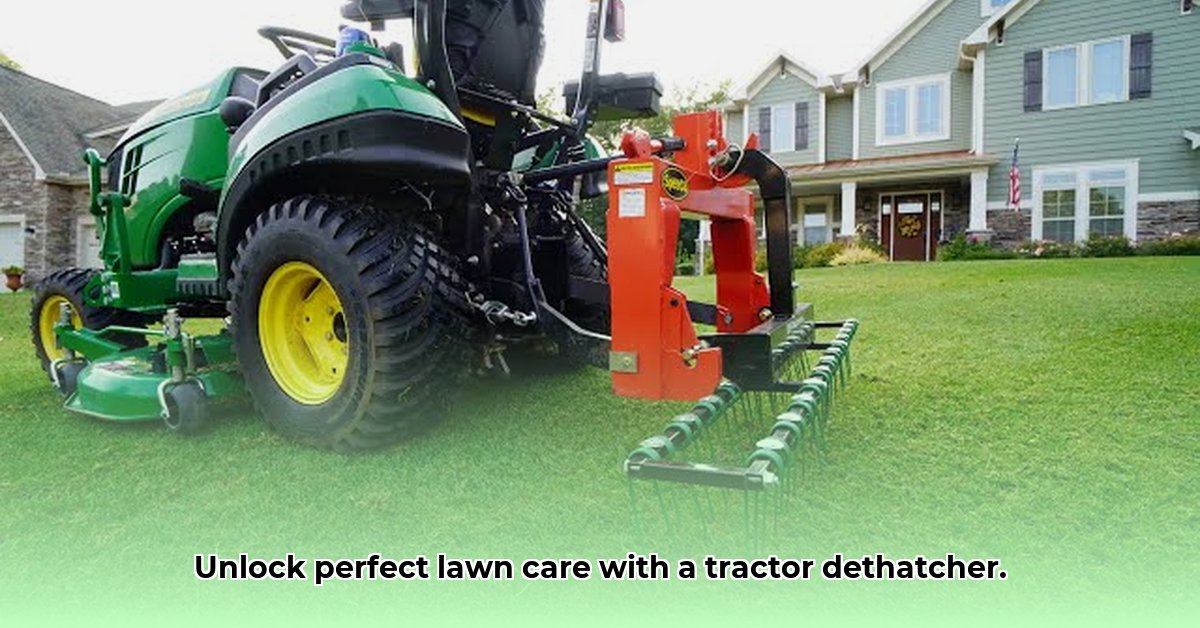
Maintaining a healthy, vibrant lawn doesn't require harsh chemicals. A tractor-mounted dethatcher offers a sustainable solution, but proper selection and use are crucial. This guide provides a step-by-step approach to effective and environmentally conscious lawn dethatching. For additional lawn care equipment, check out this helpful resource on lawn rollers.
Choosing the Right Dethatcher
Selecting the appropriate dethatcher involves considering your tractor's capabilities and your lawn's specific needs. A small tractor on a compact lawn might suffice with a lightweight dethatcher, while larger lawns demand a more robust, powerful model. The dethatcher's tines (the metal claws that remove thatch) should also be appropriate for your soil type. Closely spaced, fine tines work best for light thatch, while wider spacing tackles heavier buildup. Consult your tractor's manual and your local equipment dealer for guidance. Don't underestimate the importance of this step; choosing the wrong dethatcher can lead to inefficiency and potential damage. Why risk it?
Preparing Your Lawn for Dethatching
Before beginning, prepare your lawn for optimal results. First, mow your lawn to a height of approximately 2 inches; shorter grass allows better access to the thatch layer. Then, thoroughly clear away any leaves, twigs, or debris to prevent clogging the dethatcher and reduce its effectiveness. This pre-dethatching cleanup is environmentally beneficial, reducing the need for chemical fertilizers later. The best time for dethatching is typically spring or fall when the grass is actively growing and the weather is mild. Avoid dethatching when the soil is excessively wet, as this can lead to soil damage. Isn't it important to work with nature, rather than against it?
Step-by-Step Guide to Tractor Dethatching
Following these steps ensures safe and effective dethatching:
Safety First: Always wear safety glasses and hearing protection. Inspect your tractor and dethatcher for any potential safety issues before starting. Never operate heavy machinery when tired or unwell. Ensuring safety should be your top priority; it’s not worth the risk.
Adjust Dethatcher Depth: Set the depth to 1-2 inches, adjusting based on your soil type and thatch thickness. Shallower is generally better to avoid damaging grass roots. Why risk over-dethatching and damaging your lawn?
Overlap Passes: Overlap each pass by approximately 50% for even dethatching. This prevents missed areas and ensures consistent results. Think of it like painting a wall – you wouldn’t leave streaks, would you?
Maintain Consistent Speed: Operate the tractor at a consistent, moderate speed. Too fast leads to missed patches and potential damage, while too slow puts unnecessary strain on the equipment. Finding the right pace is key to efficiency and minimizing wear and tear.
Regularly Empty the Collection Bag: Frequently empty the collection bag to maintain dethatcher efficiency and prevent straining the equipment. A full bag significantly reduces its effectiveness.
Post-Dethatching Inspection: After completing dethatching, inspect the lawn for any missed spots. Addressing these immediately saves time and effort.
Post-Dethatching Care
After dethatching, deeply water your lawn to reduce stress and encourage healthy growth. If thatch buildup was heavy, consider aeration to improve soil structure and water penetration. Avoid heavy fertilization immediately after dethatching; give the lawn time to recover. Why rush the process when patience leads to better outcomes?
Sustainable Alternatives to Chemical Fertilizers
Instead of chemical fertilizers, consider eco-friendly options:
Compost Tea: Use the collected thatch to create compost tea, a nutrient-rich liquid fertilizer. This is an excellent method for recycling waste and providing natural nourishment for the lawn.
Organic Fertilizers: Choose a slow-release organic fertilizer for consistent nutrient delivery without the environmental drawbacks of synthetic alternatives. Such fertilizers improve soil health over time.
Troubleshooting Common Dethatching Problems
Clogged Dethatcher: If clogged, immediately stop, empty the collection bag, and remove large debris.
Uneven Dethatching: Adjust the depth, overlap passes more, or alter speed if you have uneven patches.
Lawn Damage: Reduce dethatching depth and ensure proper soil moisture to minimize damage. Remember, gentler is better.
Assessing the Environmental Impact
Responsible dethatching minimizes environmental impact. It reduces reliance on synthetic fertilizers and pesticides, improves soil health, and promotes better water retention. Every mindful choice contributes to a healthier planet. Sustainable lawn care requires a holistic approach, considering all aspects of the process. Dethatching is just one piece of the puzzle.